
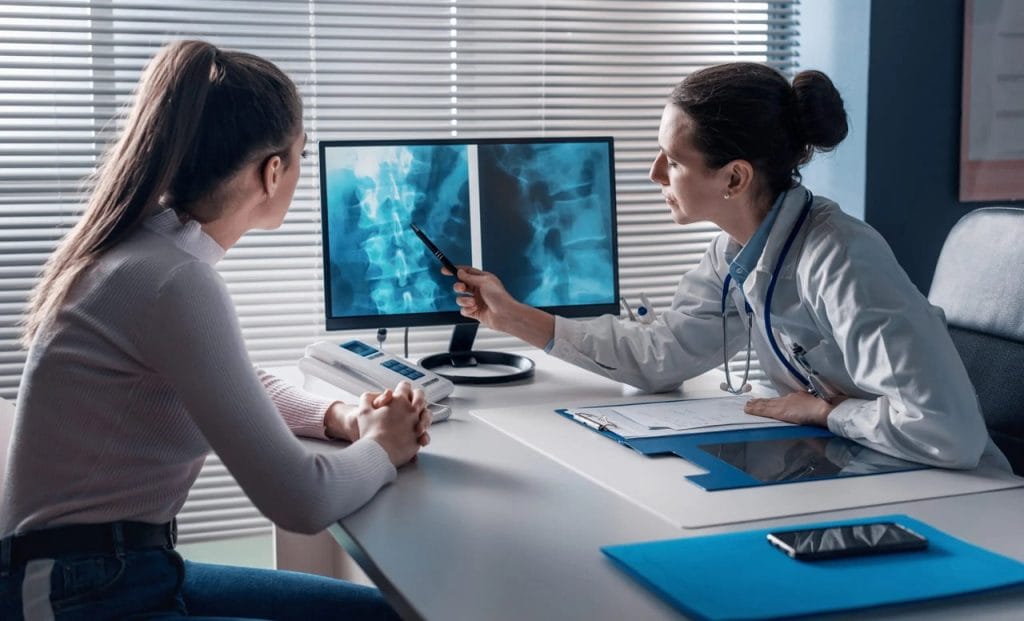
Managing scoliosis can be approached through a combination of medical strategies, personalized care, and lifestyle adjustments. Non-surgical treatments like ScoliBrace and Functional Pattern Exercises play a significant role in offering effective and accessible solutions. Here’s your updated scoliosis treatment checklist:
Medical Steps
Early Detection
- Attend yearly physical exams, particularly during ages 11–14.
- Keep an eye out for visible signs, such as uneven shoulders, rib prominence, or spinal curvature.
Regular Monitoring
- Schedule periodic X-rays or 3D imaging to track curve progression.
- Work with a scoliosis specialist to determine the severity and tailored treatment options.
Bracing (for Mild to Moderate Cases)
- Consider ScoliBrace, an advanced custom brace designed to halt and even reduce curve progression.
- Benefits include enhanced posture, reduced pain, and better body alignment.
- Wear the brace for the recommended hours daily (13–16 hours for maximum effectiveness).
- Regularly adjust the brace for growth changes if treating children or teens.
Avoiding Surgery Whenever Possible
- Non-surgical approaches, such as bracing and targeted exercises, can often delay or eliminate the need for spinal fusion surgery.
- Work with your care team to explore every non-invasive alternative.
Lifestyle Adjustments
Engage in Functional Pattern Exercises
- Incorporate exercises designed to improve body posture, align the spine, and strengthen supportive muscles.
- Benefits include better overall movement patterns and reduced risks of curve progression.
- Key exercises may focus on the core, hips, and spine to create more stability and symmetry.
Maintain Proper Posture
- Sit upright and avoid slouching to evenly distribute spinal pressure.
- Use ergonomic chairs and desk setups to support spinal health during work or study.
Stay Physically Active
- Pursue low-impact activities like walking, modified yoga, or swimming (in moderation).
- Avoid repetitive motion-heavy activities, such as competitive gymnastics or excessive backbends.
Prioritize Core Strength
- Strengthen your core through tailored exercises, such as planks, balance work, and guided resistance training.
- Functional Patterns techniques are particularly effective in reducing strain on the spine while encouraging proper movement mechanics.
Scoliosis Do’s and Don’ts
Do’s
Start Early Intervention
- Initiate treatments like ScoliBrace and functional exercises as soon as scoliosis is diagnosed.
- Keep the curve from progressing before it becomes severe.
Utilize Quality Sleep Supports
- A medium-firm mattress is ideal for maintaining spinal alignment during rest.
- Use pillows strategically to support the neck and minimize pressure points.
Stay Connected with Support Networks
- Join community or online scoliosis support groups for guidance, shared experiences, and emotional encouragement.
Seek Professional Guidance for Exercises
- Partner with a physical therapist trained in Functional Patterns or scoliosis care to create a safe and effective exercise plan.
Don’ts
Avoid Sleeping on Your Stomach
- This position can flatten natural spinal curves and increase strain on affected areas.
Skip Heavy Lifting and Improper Backpacks
- Avoid carrying heavy bags, particularly on one shoulder. Use backpacks with wide straps and evenly distribute weight.
Limit Activities That Cause Spinal Stress
- Cut back on activities like excessive swimming, backbends, or high-impact sports that could worsen the curvature.
Don’t Overlook “Text Neck” Risks
- Avoid craning the neck forward when texting or looking at screens. Use voice-to-text or hold devices at eye level.
Additional Care Tips
Nutritional Balance
- Maintain a diet rich in calcium and vitamin D to support bone health. Consider supplements if deficiencies are present.
Emotional Support
- Address anxiety or body image concerns related to scoliosis, especially in teenagers. Speak with counselors as needed.
Personalized Non-Surgical Plans
- Evaluate a combination of ScoliBrace, Functional Pattern Exercises, and other non-invasive methods to fit into your daily life.
Why Choose Non-Surgical Treatments?
Non-surgical treatments like ScoliBrace and Functional Patterns work together to address both the physical and emotional aspects of scoliosis. They allow patients to improve posture, reduce pain, and maintain an active lifestyle—all without invasive procedures. By focusing on personalized care and proactive adjustments, managing scoliosis becomes not just possible but empowering.
Follow this comprehensive checklist and consult healthcare experts to craft a scoliosis treatment plan that works best for you. Each step taken contributes to a better quality of life and a healthier spine.
ScoliBrace is a custom-designed brace that focuses on 3D postural correction, rather than simply preventing curve progression. Unlike traditional braces, it uses advanced imaging technology to provide a tailored fit, improving comfort and effectiveness. It can reduce the spinal curve, enhance posture, and even alleviate pain, making it a more dynamic option for non-surgical management of scoliosis.
Functional Pattern Exercises can complement traditional physical therapy by focusing on improving movement mechanics, core strength, and spinal alignment. While they are not a direct replacement for all physical therapy methods, they work well as part of a holistic scoliosis management plan, especially for those looking to reduce stress on the spine and enhance overall mobility.