
In order for a spinal section to function optimally, its vertebrae need to be aligned in a straight and neutral position. Spinal misalignment can cause pain, postural changes, mobility issues, and nerve compression. The first step to treating atlas bone misalignment is determining its underlying cause.
The atlas bone is the first vertebra of the cervical spine, located directly beneath the skull; its atypical ring-shape makes it easier to support the weight of the head. Atlas misalignment means the C1 vertebra has shifted out of position and can cause pain, headaches, dizziness, and postural changes.
When the spine is misaligned, it not only affects the function of the spine itself but can also disrupt posture and healthy movement patterns.
What is the Atlas Bone?
The spine consists of vertebrae (bones) stacked on top of one another and has a number of supportive structures including its surrounding muscles, ligaments, and connective tissues.
The spine and its supportive structures work together to maintain its straight and neutral alignment, and if there is a shift in the position of a vertebral body that disrupts its alignment with the rest of the spine, a number of effects can develop.
The atlas bone is the first vertebra of the spine; it sits directly below the skull so connects the brain to the spine and the rest of the body.
Typical healthy vertebrae are rectangular in shape, but the atlas bone is atypically ring-shaped due to its placement and function.
The spine has three main sections: the cervical spine (neck), thoracic spine (middle/upper back), and the lumbar spine (lower back).
Each spinal section has unique roles to play in maintaining overall spinal health and function.
The atlas bone also facilitates the head’s ability to nod and rotate while protecting the spinal cord.
If the atlas bone shifts out of position, the cervical spine is misaligned and can cause a number of symptoms.
Atlas Bone Misalignment Symptoms
The spine’s alignment is important for its overall health and function. The spine has many roles including structural support for the torso, protecting the spinal cord for a healthy central nervous system, facilitating healthy posture and mobility, and shock absorption.
If the spine becomes misaligned, its balance and stability are disrupted, and location, cause, and severity will shape symptoms and treatment needs.
Common atlas misalignment symptoms include chronic pain, headaches, dizziness, and postural deviation.
Head and neck pain are caused by uneven pressure and muscle strain, and neurological symptoms include dizziness and vestibular-system issues.
If the spine’s misalignment starts at the top, it can disrupt posture by causing uneven shoulders and an unnatural pelvic tilt.
When the neck’s alignment is disrupted, it can cause the head to shift forward (forward head posture) to compensate, increasing the weight of the head on the cervical spine.
Tingling and numbness in the hands can also develop due to nerve compression. Fatigue and jaw pain are also common.
Causes of Atlas Misalignment
Determining the cause of a misaligned atlas is the first step to customizing a potentially-effective treatment plan.
Atlas misalignment can be caused by spinal trauma such as whiplash from a car accident or stress from a fall.
Chronic poor posture can contribute to an atlas bone’s shift in position due to uneven forces and strain on the vertebrae and the cervical spine’s supportive structures.
Degenerative changes in the spine is a common cause of misalignment; if the joint that sits between the atlas bone and the C2 vertebrae is degenerating, it can affect the health and position of the atlas bone above.
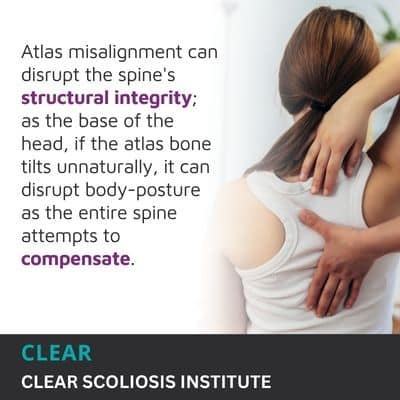
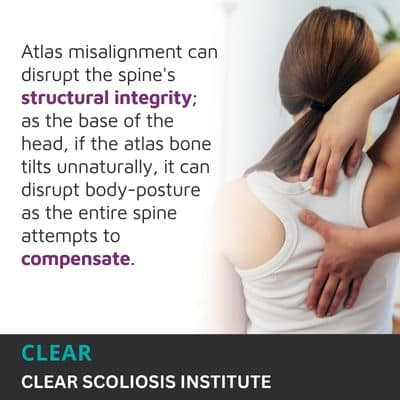 Atlas misalignment can disrupt the spine’s structural integrity; as the base of the head, if the atlas bone tilts unnaturally, it disrupts body-posture as the spine attempts to compensate.
Atlas misalignment can also disrupt nerve function if the brain stem and/or never roots are exposed to uneven pressure, causing pain and nerve dysfunction.
Atlas Bone Misalignment Treatment Options
In order to improve spinal health and function, the spine’s structural misalignment has to be addressed.
If a single vertebral body shifts out of alignment with the rest of the spine, the uneven forces can be felt throughout.
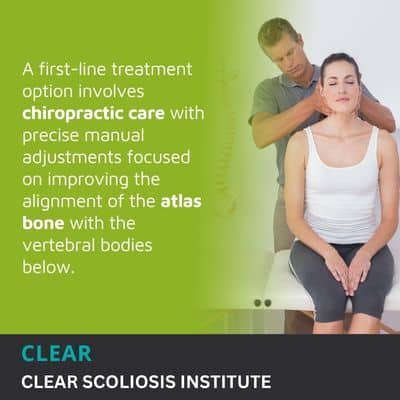 A first-line treatment option involves precise chiropractic care with manual adjustments focused on improving the alignment of the atlas bone with the vertebral bodies below.
The atlas orthogonal technique uses a specialized chiropractic tool for painless adjustment of the atlas bone through light controlled pressure.
Gentle and precise adjustments are performed to correct the C1 vertebra’s misalignment. Using X-ray analysis to determine a patient’s exact degree of misalignment, correction goals are customized, and light pressure applied under the ear may improve the spine’s balance, improve pain, and restore nerve function.
Physical therapy can help improve support for the cervical spine through muscle strengthening/balancing, taking pressure off the atlas bone and cervical vertebrae, and reducing muscle tension can help with pain management.
Because the atlas supports the weight of the head and shapes the spine’s alignment from the top, improvements to its position can improve structural asymmetries throughout the spine, and this will further improve the position of the pelvis for straighter upright postural alignment.
Each spinal section has the responsibility of protecting the spinal cord; a vertebral subluxation in the cervical spine can interfere with brainstem and central nervous system function.
Conclusion
The effects of a misaligned spine can be felt throughout the body, and if the spine is misaligned at the top, its effects can be felt throughout the spinal sections below.
A healthy spine has its natural curves in place and a straight and neutral alignment. An aligned spine is one that’s balanced and stable.
The atlas bone is the first vertebral body of the spine, so it shapes spinal health in a number of ways. Because of the atypical ring-shape of the atlas bone, it’s better able to support the weight of the head and the neck’s ability to support head movement.
Symptoms of atlas misalignment can include tension headaches, migraines, neck and shoulder pain, postural changes, and tingling/numbness in the hands and feet due to compressed nerves.
The first line of treatment is often noninvasive chiropractic care that focuses on improving the position of the atlas bone so the spine’s structural misalignment is addressed.
Vertebral subluxations can also benefit from improvements to the spinal section’s surrounding muscle strength and balance through physical therapy.
For sustainable treatment results, the structural position of the atlas bone has to be improved, which further relaxes strained muscles while restoring their strength and balance for more spinal support and long-term stability.
Here at the Atl anta Scoliosis Center, treatment plans work towards securing the best possible outcome for the patient, including long-term pain relief and improvements to the spine’s balance and stability.
The post Atlas Bone Misalignment: Key Symptoms and Treatment appeared first on Atl anta Scoliosis Center.