
As a structural spinal condition that causes an unhealthy lateral spinal curve to develop, no changes to diet alone can improve the scoliosis itself, but a healthy diet and lifestyle can make the body more responsive to treatment.
Scoliosis foods to avoid are those that impact overall and spinal health negatively through weight gain and inflammation. Avoiding sugary and fatty foods is important, and staying hydrated is key for muscles and intervertebral-disc health.
A nutrient-rich balanced diet supports muscle and bone health and helps maintain a healthy weight.
Scoliosis and Overall Health
Although scoliosis is a spinal condition, its effects can be widespread.
Scoliosis affects all ages, and its most prevalent type is adolescent idiopathic scoliosis.
In children, the primary effects of scoliosis include postural deviation and disruptions to balance and gait, and the main effects of adult scoliosis include pain and increasing instability in the spine.
As a progressive condition, most cases of scoliosis increase in severity; in children, growth is the main trigger for progression, and in adults, age-related spinal degeneration can trigger the onset of degenerative scoliosis and curve progression.
While mild cases can involve subtle symptoms, they can become more noticeable as progression occurs, and as the scoliosis progresses, spinal rigidity can increase, making it more challenging to treat as the spine is less responsive.
We don’t know what causes most cases of scoliosis to develop initially, but we know growth spurts cause progression, and we know a comprehensive treatment plan helps patients cultivate a scoliosis-friendly lifestyle.
Scoliosis and Diet
Diet and nutrition matter for everyone, but for scoliosis patients, diet and lifestyle are factors that may contribute to treatment responsiveness.
A healthy diet is important for maintaining a healthy weight and activity level, and when it comes to spinal health, the spine’s natural design is movement and function based.
The spine acts as a skeletal anchor for the body’s musculoskeletal system, an attachment point for a number of muscles and supportive structures, and protects the spinal cord for central nervous system function.
A healthy diet is key for bone and muscle health, and the spine’s alignment is shaped by a number of factors including spinal structure and how much support it’s getting from its surrounding muscles.
Diet is also important for mental health; poor mental health can be a challenge when it comes to dealing with the rigors of treatment. A scoliosis diet should provide enough energy for patients to perform scoliosis-specific exercises that are key to nonsurgical treatment plans.
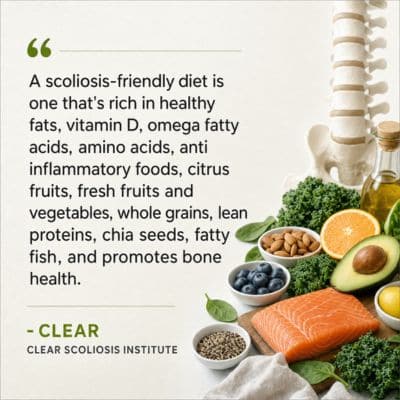
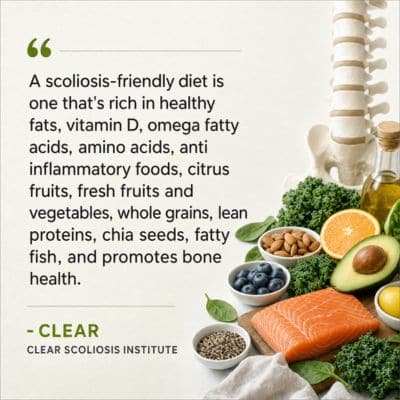 A scoliosis-friendly diet is one that’s rich in healthy fats, vitamin D, omega fatty acids, amino acids, anti inflammatory foods, citrus fruits, fresh fruits and vegetables, whole grains, lean proteins, chia seeds, fatty fish, and promotes bone health.
Scoliosis foods/drinks to avoid include unhealthy fats, artificial sweeteners, sugary drinks, excessive alcohol consumption, processed foods, high fructose corn syrup, junk food, and packaged luncheon meats; let’s discuss why these foods can be harmful for scoliosis patients.
Sugary Foods and Drinks
A healthy diet for scoliosis is one that doesn’t involve sugary foods and drinks. Processed foods high in sugar don’t sustain energy levels and a healthy weight.
A diet high in sugar can cause weight gain that adds pressure to the body’s joints, bones, and muscles, and regular consumption of soda drinks and sugary foods can also cause inflammation.
Inflammation causes muscle pain and tiredness, and muscle health is a focus of nonsurgical scoliosis treatment. Sore and unbalanced muscles are a common scoliosis effect, so an anti-inflammatory diet is best for scoliosis patients.
High-Sodium Foods
Processed foods are high in sugar and salt, and a high salt-intake can impact bone density and the body’s overall health and hydration.
Strong bones are necessary to prevent injury, and when it comes to scoliosis, bone health is a factor that shapes treatment responsiveness.
Staying hydrated is important for overall health and the health of the spinal discs. An intervertebral disc sits between adjacent vertebral bodies (bones of the spine), and these discs lose water over time, and a diet that’s high in salt and processed snacks can contribute to dehydration, and disc desiccation and degeneration is a contributing factor in a number of spinal conditions, including scoliosis.
Fatty Foods
Consuming foods with a lot of trans fats and saturated fats can lead to weight gain, and the extra pressure on the spine and its supportive structures can contribute to the onset of degenerative changes within the spine.
Weight gain isn’t conducive to a healthy activity level, and anything that prevents regular movement can have a number of negative effects on the body and mind.
It’s also more difficult to diagnose scoliosis in people carrying excess weight; it’s harder to detect a spinal imbalance and/or postural asymmetries.
Scoliosis patients who maintain a healthy weight and activity level have more energy to handle the challenges of treatment, and scoliosis management involves a proper diet, staying active, and committing to a proactive treatment plan.
Vitamin-Rich Diet
A vitamin-rich diet is beneficial for bone health, muscle health, and overall health, and while the etiology of idiopathic scoliosis isn’t fully understood, there are a number of theories and studies that link scoliosis with certain nutrient deficiencies.
A diet high in vitamin D can offer bone-strengthening benefits, and vitamin B is important for energy and stress management. Vitamin B deficiency has been linked to scoliosis, and introducing methylated B12 can boost the body’s neurotransmitter production: serotonin and dopamine are key to healthy movement, digestion, coordination, and emotional stability.
 A balanced diet with nutrient dense foods can improve overall health, energy, bone health, muscle health, and mental health: factors that increase potential treatment responsiveness and efficacy.
Scoliosis Treatment Efficacy
There are a number of factors that shape a patient’s scoliosis severity, symptoms, and treatment needs.
Here at the Atl anta Scoliosis Center, treatment plans are fully customized and comprehensive, including lifestyle guidance for improvements to overall health and spinal health.
Conservative nonsurgical treatment options include scoliosis-specific physical therapy, corrective bracing, and chiropractic care.
When the spine’s position and alignment are improved, along with the spine’s surrounding muscle balance and strength, scoliosis can be managed effectively and its effects can be minimized.
There are never treatment guarantees, but with a complete approach to care that involves a customized treatment plan and lifestyle guidance, many cases of scoliosis are highly treatable.
Conclusion
People with scoliosis can lead fulfilling lives in every way; they can stay active and mobile while treating the scoliosis accordingly.
A key facet of nonsurgical scoliosis treatment is the potential of scoliosis-specific exercise to strengthen and balance the spine’s surrounding muscles for optimal support and stability.
Practicing a spine- and scoliosis-friendly lifestyle includes maintaining a healthy weight, activity level, and diet.
Scoliosis foods to avoid are those that don’t support bone, muscle, and overall health: excessively sugary, salty, and fatty foods. Heavily-processed foods can contribute to inflammation, poor muscle, and bone health, and a high-sodium intake can contribute to dehydration and disc desiccation.
A diet that’s rich in fruits and vegetables, whole grains, and lean proteins provides vitamins and protein needed for bone, muscle, and overall health, and can increase energy to meet treatment needs.
A healthy diet helps maintain a healthy weight for less pressure on the spine, and better energy levels and mental health benefits can help patients handle treatment requirements and minimize potential scoliosis effects.
The post Scoliosis Foods to Avoid: Essential Tips appeared first on Atl anta Scoliosis Center.